
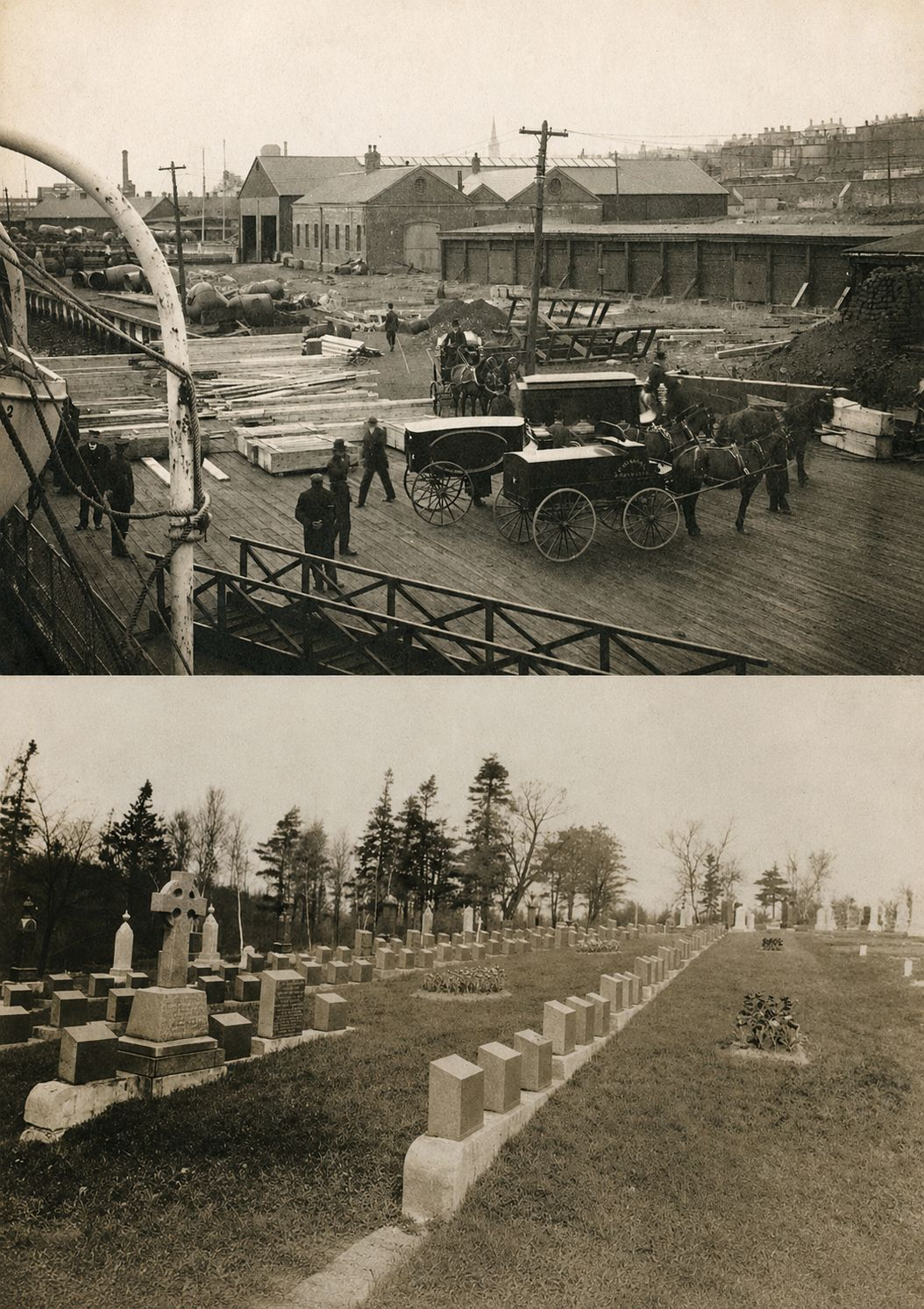
In the grim aftermath of the Titanic disaster, the crew of the recovery vessel Mackay-Bennett encountered a scene of silent devastation. Among the hundreds of victims drifting in the North Atlantic was a sight that shattered the composure of even the most weathered sailors: a small boy, fair-haired and barely a toddler, floating alone in the freezing swells.
He wore tiny leather shoes and a lifejacket that had failed to save him. With no parents nearby and no identification to be found, he became a symbol of the tragedy’s purest innocence.
A Gesture of Heartfelt Grief
The recovery workers, deeply moved by the sight of the “Unknown Child,” refused to let him be buried in a nameless pauper’s grave. Out of their own pockets, the crew members funded a dignified farewell. They provided:
- A white casket to signify his youth and innocence.
- A formal funeral service in Halifax, Nova Scotia.
- A headstone at Fairview Lawn Cemetery, etched with a simple, haunting dedication to the child recovered from the waves.
For nearly a hundred years, this grave became a site of pilgrimage. It was covered in toys, letters, and stuffed animals left by strangers who felt a profound connection to the boy the sea had claimed.
Restoring a Lost Identity
For decades, the child’s identity remained one of the Titanic’s most enduring mysteries. It wasn’t until the 21st century that forensic science caught up with history. Through advanced DNA testing, researchers finally gave the boy his name back: Sidney Leslie Goodwin.
Sidney was just 19 months old when he perished along with his parents and five siblings. They had been traveling as third-class passengers, seeking a new life in America. While the Goodwin family was entirely wiped out by the sinking, the enduring care shown to Sidney by a crew of grieving sailors ensured that he was never truly alone.
Even with a name now carved into history, the image of the small boy in the white coffin remains a powerful reminder of the human cost of the world’s most famous shipwreck.

Leave A Comment